I
The Mechanics of Resistance
Examine what may sit beneath an objection: psychological reactance, cognitive dissonance, resistance, and defensive responses—before trying to defeat it.
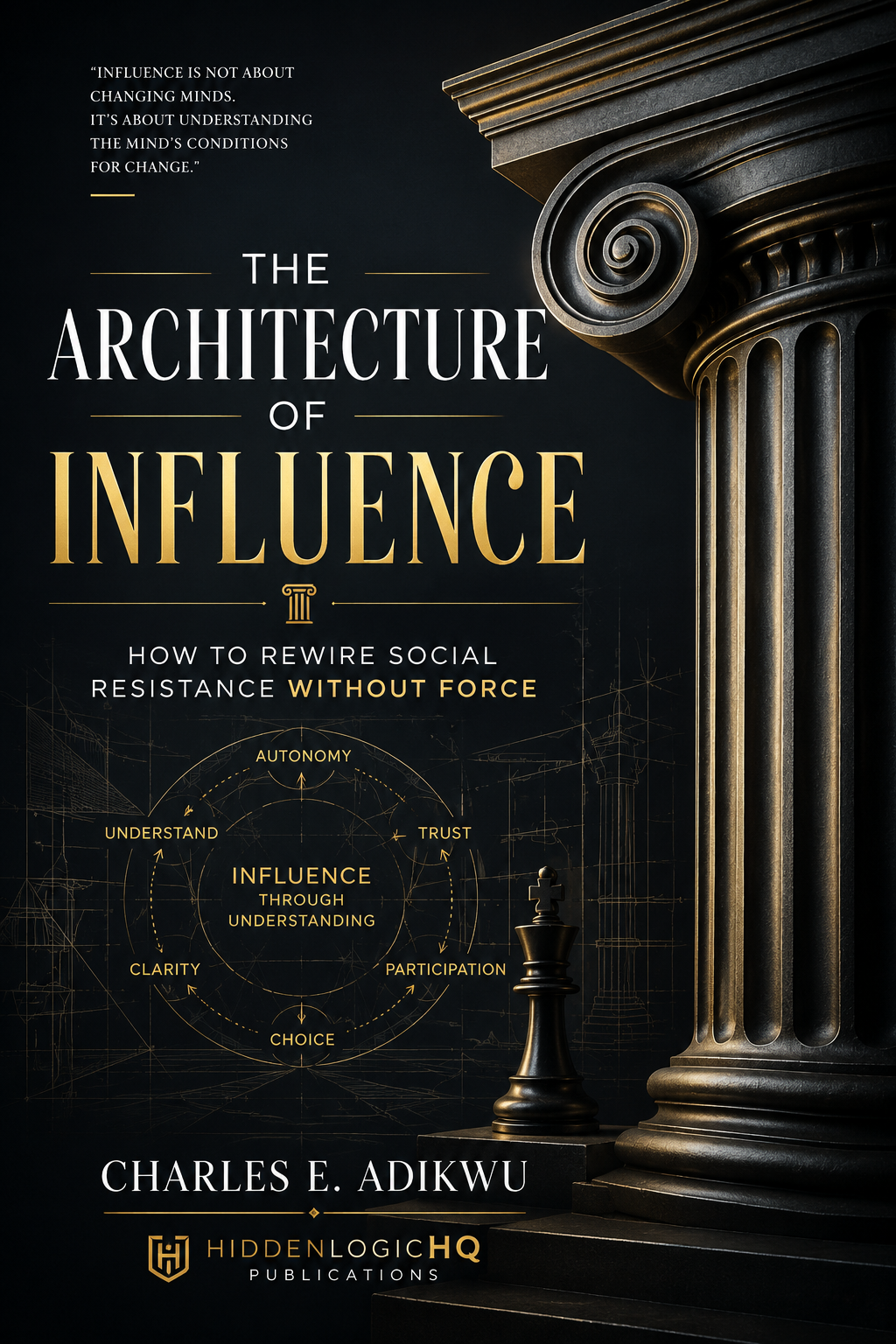
A book by Charles E. Adikwu
How to Rewire Social Resistance Without Force
By Charles E. Adikwu
“Influence is not about changing minds. It’s about understanding the mind’s conditions for change.”
A psychology-backed framework for understanding resistance, navigating conflict, securing genuine buy-in, and reducing social friction—without relying on force.
The familiar pattern
01Someone says no.
02You explain harder.
03They object.
04You provide more evidence.
05They push back again.
The conversation becomes less about understanding and more about winning. But resistance is not always caused by missing information. Autonomy, identity, perceived threat, cognitive effort, framing, credibility, existing beliefs, and social context may already be shaping the response.
The central question
People do not evaluate information in isolation. Before facts are fully weighed, they may already be responding to who is speaking, how the idea is framed, what it appears to threaten, what accepting it might mean about them, how much effort it demands, and whether the source feels credible.
The proposition
The Architecture of Influence by Charles E. Adikwu presents a psychology-backed framework for navigating conflict, securing genuine buy-in, and reducing social friction.
It helps readers examine the forces shaping judgment and work with those conditions rather than simply pushing against them. It does not promise compliance. It offers a more disciplined way to understand what is happening.
True influence should not depend on deception, hidden coercion, or keeping another person unaware of what is happening.
The book treats ethical boundaries as part of effective influence. Understanding is not the enemy of influence.
Inside the book
I
Examine what may sit beneath an objection: psychological reactance, cognitive dissonance, resistance, and defensive responses—before trying to defeat it.
II
Explore how identity, framing, cognitive effort, credibility, perception, and judgment shape the decision environment before facts are fully weighed.
III
Apply the ideas through the 10-Step Master Influence Architecture: a repeatable framework for negotiating interests, reducing friction, and building trust.
Practical by design
Practical ways to apply the underlying concepts to real interactions.
Clear boundaries between legitimate influence and coercive manipulation.
Ways to test whether an interpretation or approach holds up.
A structured way to examine the source and nature of resistance.
A repeatable path from diagnosis toward productive influence.
A working vocabulary
The visible objection may not reveal the real source of the ‘no’.
Perceived threats to autonomy can produce resistance of their own.
Ideas are judged partly through who people believe themselves to be.
Presentation and context can affect how information is interpreted.
The mental work a decision requires can shape how it is received.
Perceived source reliability affects how information is weighed.
Who it is for
Who it is not for
It is not designed for people looking for manipulation tricks, coercive persuasion, psychological domination, guaranteed compliance, or secret methods for making people obey.
What the reader can learn
The book develops a structured way to think about resistance, competing interests, autonomy, identity, framing, cognitive effort, credibility, social friction, difficult conversations, and agreement.
The aim is not control. It is better diagnosis, more deliberate communication, and a clearer understanding of the conditions in which judgment takes place.
From concept to practice
The book brings its psychological concepts together into a structured ten-step approach. The sequence is designed to move from diagnosis toward productive influence without fabricating shortcuts or forcing outcomes.
Ten stages · Step details remain inside the book
The book’s value
About the author
Author of The Architecture of Influence
Charles E. Adikwu is the author of The Architecture of Influence, a practical exploration of resistance, judgment, influence, and the psychological conditions surrounding agreement.
Publishing identity
HiddenLogicHQ Publications publishes serious material exploring human behavior, psychology, decision-making, influence, behavioral mechanisms, and strategic thinking.
Questions, answered
The Architecture of Influence
Learn to examine resistance, judgment, and the conditions surrounding agreement with greater structure, care, and practical intelligence.
How to Rewire Social Resistance Without Force
Charles E. Adikwu
Published by HiddenLogicHQ Publications
Price to be confirmed